How to Buy a Diamond Ring: A Buyer's Guide
Buying a diamond ring, ready-made or custom? Here is what shapes pricing, timelines, and quality, plus how jewelers and private buyers source smarter.
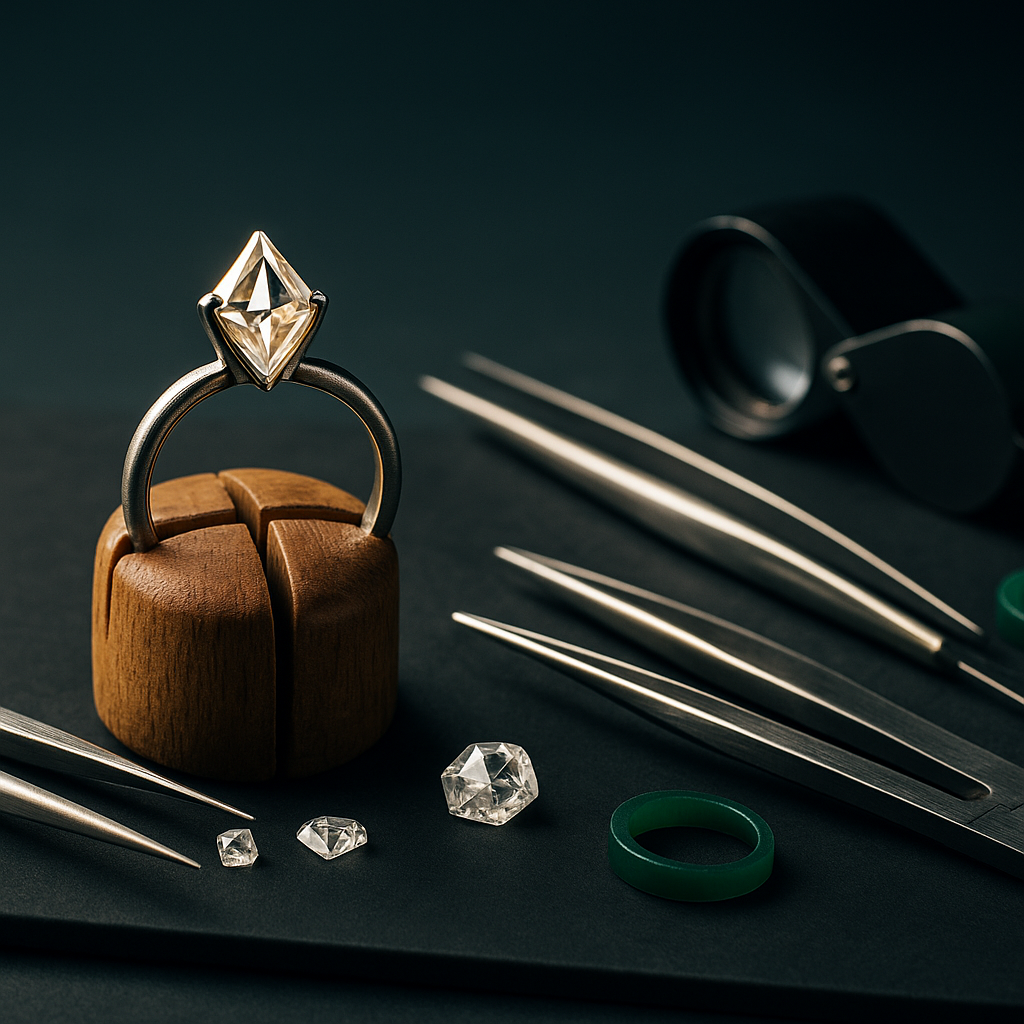
Why "buy diamond ring" is not one simple purchase
Anyone typing "buy diamond ring" into a search bar is actually facing one of two very different decisions. Either you want a finished ring off a shelf today, or you have a design in your head that nobody seems to stock. These two paths lead to different price points, different timelines, and different levels of control over the final piece.
Independent jewelry shops searching this same phrase are usually shopping on behalf of their customers, looking for dependable wholesale sources rather than a single ring. Private buyers are usually trying to solve a specific problem: a proposal ring that does not exist in any display case, a family stone that needs a new setting, or a shape nobody local can cut. Bespoke Carat works with both groups, and the advice below applies whether you are buying one ring or sourcing dozens.
Ready-made versus custom: the real trade-off
A ready-made ring from a retail case is fast. You can see it, try it on, and walk out with it the same day. But "fast" comes with a cost: you are choosing from whatever combination of shape, carat, and setting the retailer happened to stock, not the combination you actually want.
Custom-built rings flip that trade-off. You choose the diamond shape, the cut, the color intensity if it is a fancy color stone, the metal, and the setting style. The cost is time: a custom ring typically takes 3 to 6 weeks from confirmed design to delivery, depending on how unusual the stone shape is and whether the center stone needs custom cutting.
Our own team's take: most delays in custom ring orders do not come from the metalwork. They come from buyers choosing a diamond shape that needs to be cut to order, then being surprised that cutting a non-standard shape takes longer than setting it.
What actually drives the price of a diamond ring
Four things determine what you pay, and they do not move together. Understanding each one separately helps you figure out where you can spend less without compromising the ring you actually want.
- The diamond itself. Lab-grown diamonds run roughly 60 to 85 percent less than mined diamonds of comparable size, clarity, and color, which is why most custom engagement ring buyers now default to lab-grown as the obvious choice rather than a compromise.
- Shape and cut complexity. Round and princess cuts are cut in volume and priced accordingly. Portrait cuts, fancy shapes, and anything with a custom outline cost more per carat because each stone is planned and cut individually.
- Metal. 14k gold, 18k gold, and platinum settings carry different base costs before a single stone is set, and platinum runs noticeably higher due to both material cost and the labor needed to work it.
- Setting complexity. A simple solitaire setting is cheaper to fabricate than a halo, a three-stone layout, or a setting built around tapered baguette shoulder stones.
Lab-grown versus mined: what buyers actually need to know
Lab-grown diamonds are chemically, physically, and optically identical to mined diamonds. The difference is origin, not composition, and that distinction matters for certification, pricing, and buyer expectations.
| Factor | Lab-Grown Diamond | Mined Diamond |
|---|---|---|
| Typical cost for comparable size/clarity | 60 to 85 percent less | Full market price |
| Supply reliability | Consistent, grown to spec | Subject to natural scarcity |
| Unusual shapes and custom cuts | Readily cut to order | Limited stock, higher premiums |
| Certification available | Yes, standard grading reports apply | Yes, standard grading reports apply |
| Resale perception | Still developing as a market | Established secondary market |
The certification point deserves its own emphasis. A lab-grown diamond should come with a grading report from a recognized laboratory, the same way a mined stone would, and the report should clearly state the stone's origin as laboratory-grown. The Gemological Institute of America (GIA) now grades lab-grown diamonds under its own distinct report format, which is the standard most US and Canadian jewelers ask for when verifying a stone before resale.
For jewelry shops and retailers: sourcing without the guesswork
If you run an independent shop or a mid-size retail operation, "buy diamond ring" usually means you are trying to answer a sourcing question, not a single-purchase question. You need stones you can mark up reliably, shapes your competitors are not all carrying, and a supplier who will still answer the phone after the sale.
Here is what to check before committing to a wholesale supplier:
- Minimum order quantity. Ask directly rather than assuming. Some suppliers require large standing orders; others will work with smaller, more frequent orders, which matters if you are testing a new shape or price point with your customers.
- Lead time on custom cuts. Standard shapes in stock sizes can ship fast. Custom-cut shapes, portrait cuts, and fancy cuts typically need 2 to 5 weeks depending on carat weight and how exact the outline needs to be.
- Matching pairs and layout stones. If you sell earrings or three-stone rings, confirm the supplier can deliver matched pairs with consistent color and clarity, not just similar-looking singles.
- Packaging and shipping standards. International shipments need secure, insured handling and documentation that will clear customs without delay.
- Grading documentation. Every stone above a certain size should arrive with a report from a recognized lab, not just a supplier's internal grade sheet.
Bespoke Carat supplies independent shops and retailers across the US and Canada with lab-grown diamonds and custom-cut stones in shapes that are hard to find elsewhere, including pieces like the Shield Cut Lab Grown Diamond Matching Pair and the Dutch Cut Lab Grown Diamond, both aimed at retailers who want a shape their competitors are not carrying.
For private buyers: how to commission a custom ring
If you are buying for yourself or a partner and nothing in a display case fits, commissioning is the straightforward answer, not a luxury upgrade. The process is more structured than most first-time buyers expect.
- Decide on the center stone shape first. Round, oval, and cushion are the most common. Fancy and portrait cuts cost more and take longer, but they are the whole reason to go custom in the first place.
- Pick your carat and budget range. Lab-grown pricing gives most buyers significantly more carat weight for the same budget as a mined-diamond ring, which is why custom lab-grown rings have become the default rather than the exception.
- Choose the setting style. Solitaire, halo, three-stone, or a layout built around accent stones such as Vivid Blue Tapered Baguette Shoulder Stones for Custom Jewelry Layouts.
- Confirm sizing. Ring sizing is the single most common cause of delay after the design is approved, so get an accurate size before placing the order rather than guessing.
- Review a design proof before fabrication begins. A reputable maker will show you a rendering or wax model before cutting metal, catching problems while they are still cheap to fix.
A sharp number to remember: ring sizing errors, not design changes, cause most of the delays in custom orders that run past their quoted timeline.
Unusual shapes: where custom cutting actually matters
Round brilliant diamonds are the safe, standard choice, and there is nothing wrong with safe. But buyers who search "buy diamond ring" after already browsing standard retail are often doing so precisely because round was not what they wanted.
Fancy and antique-inspired cuts like the Portuguese cut carry more facets and a distinct brilliance pattern that a standard round stone cannot replicate. The Portuguese Cut Lab Grown Diamond is a good example of a shape that looks dramatically different from a standard round at the same carat weight, which is exactly the point for a buyer who wants their ring to be identifiable as theirs.
Portrait cuts go even further, often cut to a specific outline requested by the buyer or jeweler. These are not stock items. They are planned stone by stone, which is why lead times for portrait cuts run longer than for standard fancy shapes, typically on the higher end of the 2 to 5 week range mentioned above.
Packaging, shipping, and what to expect on delivery
Diamonds and finished jewelry both need secure handling, but the standards are not identical. Loose stones ship in sealed, tamper-evident packaging with full documentation attached. Finished rings ship insured, boxed to prevent movement, with tracking provided end to end.
For international orders between the US and Canada, customs documentation needs to match the grading report exactly, including carat weight, shape, and origin designation. Mismatched paperwork is the most common cause of customs delay, more common than any issue with the stone itself. A supplier who handles this routinely will not need to be reminded about it.
How to request a quote
Getting an accurate quote takes a few specific pieces of information, not a vague description. Have these ready before you reach out:
- Diamond shape and approximate carat weight
- Whether you need a single stone, a matching pair, or a full layout
- Metal preference, if you are ordering a finished ring rather than a loose stone
- Quantity, if you are a retailer ordering for inventory rather than a single piece
- Target delivery window, especially if the order is tied to a specific date like a proposal
A supplier who gives you a real price range and a real lead time on the first conversation is telling you something useful about how they will handle the rest of the order.
Frequently Asked Questions
Is a lab-grown diamond a real diamond?
Yes. Lab-grown diamonds have the same chemical structure, hardness, and optical properties as mined diamonds. The only difference is that they are grown in a controlled environment rather than formed underground over geologic time.
How much does a custom diamond ring typically cost compared to buying one ready-made?
Custom rings are not automatically more expensive. Because lab-grown diamonds cost 60 to 85 percent less than mined stones of similar size and clarity, a custom lab-grown ring often costs less than a ready-made ring built around a mined diamond.
How long does a custom ring take to make?
Most custom rings take 3 to 6 weeks from confirmed design to delivery. Portrait cuts and unusual fancy shapes sit toward the longer end of that range because the stone has to be planned and cut to order.
What is the minimum order for retailers buying wholesale?
This varies by supplier and by whether you are ordering standard shapes or custom cuts. Ask directly and compare the answer against your actual sales volume before committing to a standing order size.
Do lab-grown diamonds come with certification?
Yes, reputable suppliers provide grading reports from recognized labs such as GIA, which now issues a distinct report format for lab-grown stones stating origin clearly alongside the standard clarity and color grades.
Can I get a matching pair of unusual-shaped diamonds for earrings or a three-stone ring?
Yes, but confirm this specifically with your supplier before ordering, since matched pairs in fancy shapes require more careful selection than single stones and not every supplier stocks or cuts them in pairs.
Work with Bespoke Carat
Whether you are an independent shop looking for a dependable wholesale source of lab-grown diamonds and unusual shapes, or a private buyer who wants a ring built around a stone nobody else is stocking, the path forward is the same: get specific about shape, carat, and timeline, then find a supplier who can answer those questions directly instead of hedging. Bespoke Carat manufactures and supplies lab-grown diamond jewelry and custom-cut stones for both retail partners and private clients across the US and Canada, with a focus on the fancy cuts and portrait cuts that standard retail cannot offer. To get a real price range and a real lead time for your project, reach out to Bespoke Carat with your shape, carat, and timeline in hand.
---
Enjoyed this? Subscribe to our newsletter for more like it, straight to your inbox.
Visit Bespoke Carat